
- Prep Time :
15 minutes - Cook Time :
30 to 35 minutes - Servings :
10–12
Bright, fragrant, and impossibly tender, this Orange Olive Oil Cake celebrates everything we love about citrus season. With a soft crumb and delicate crust, this orange olive oil cake highlights fresh orange zest and the richness of extra virgin olive oil.
If you’ve been hunting for an Orange Olive Oil Cake that’s simple to make yet elegant enough for guests, this orange olive oil cake recipe is the one to bookmark. Serve this Orange Olive Oil Cake with afternoon coffee, a dollop of whipped cream after dinner, or as a sunshiny brunch treat—its fresh citrus flavor shines in every slice.
What makes this Orange Olive Oil Cake special? It relies on pantry staples and a splash of orange juice to deliver incredible flavor without fuss. The result is a moist, tender orange olive oil cake that stays delicious for days.
Table of Contents
Table of Contents
Why You’ll Love This Cake
- Silky, moist crumb: Olive oil keeps the cake tender and supple for days.
- Vibrant citrus: Fresh orange zest and juice deliver clean, bright flavor.
- No mixer required: A simple whisk-and-fold method makes it weeknight-friendly.
- Everyday or elegant: Perfect for coffee breaks, brunch spreads, or festive desserts.
- Foolproof and flexible: Works in a round cake pan or loaf pan with small adjustments.
What You Need for Orange Olive Oil Cake
- 8-inch or 9-inch round cake pan (or 8.5×4.5-inch loaf pan)
- Parchment paper for the pan base
- Whisk and two mixing bowls
- Microplane or fine grater for zesting
- Measuring cups/spoons (or a kitchen scale for accuracy)
- Cooling rack
Ingredients
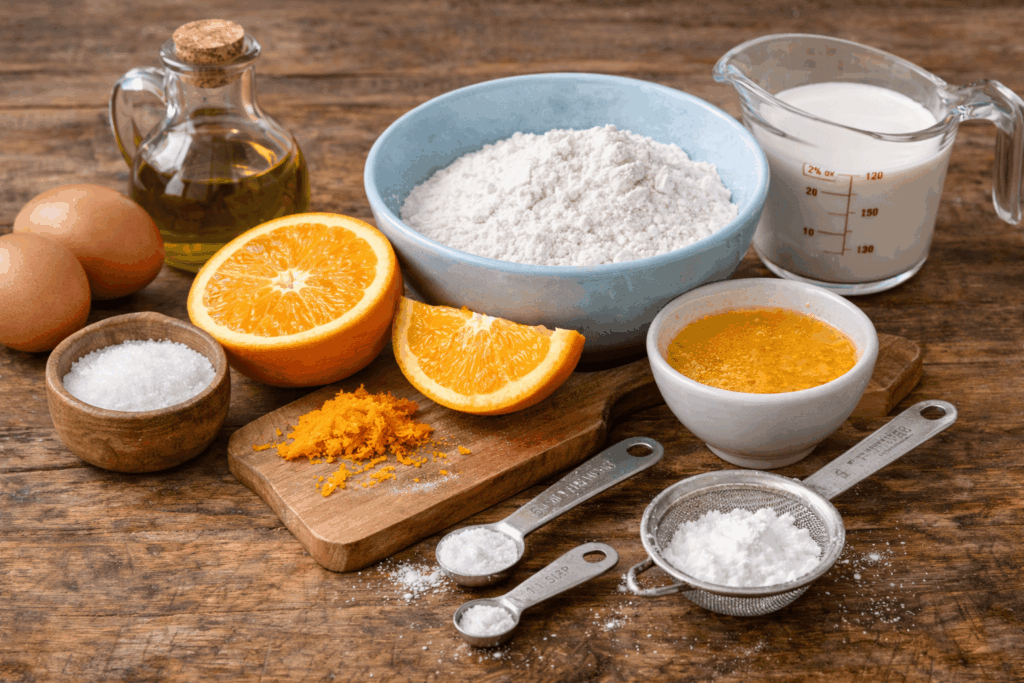
- 2 large eggs
- 2/3 cup sugar
- 1/2 cup extra virgin olive oil
- 1/3 cup 2% milk
- 1 tablespoon grated orange zest
- 3 tablespoons orange juice (fresh is best)
- 1 cup all-purpose flour
- 1 teaspoon baking powder
- 1/4 teaspoon salt
- Confectioners’ sugar, for dusting
How to Make the Best STEP-BY-STEP
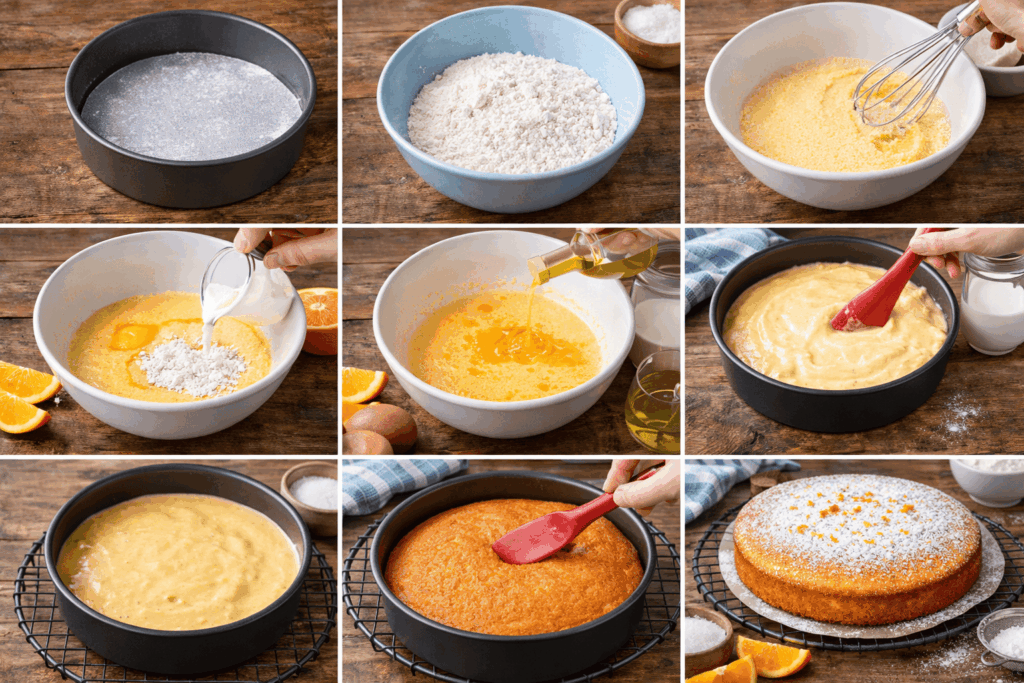
- Prep the pan and oven: Preheat the oven to 350°F (175°C). Grease an 8-inch or 9-inch round cake pan and line the bottom with parchment. Lightly grease the parchment as well.
- Combine dry ingredients: In a medium bowl, whisk together the flour, baking powder, and salt. Set aside.
- Whisk eggs and sugar: In a large bowl, whisk the eggs and sugar for 1 to 2 minutes until slightly pale and thickened. A vigorous whisk incorporates air for a lighter crumb.
- Add zest and liquids: Whisk in the orange zest and orange juice until fragrant. Stream in the olive oil slowly while whisking until fully emulsified, then whisk in the milk just until combined.
- Fold in dry ingredients: Add the dry mixture to the wet ingredients. Use a spatula to gently fold just until the flour disappears. Do not overmix—this keeps the cake tender.
- Fill the pan: Pour the batter into the prepared pan and smooth the top with a spatula. Tap the pan gently on the counter to release any large air bubbles.
- Bake: Bake for 30 to 35 minutes, or until the top is lightly golden and a toothpick inserted in the center comes out clean or with a few moist crumbs.
- Cool: Let the cake cool in the pan for 10 minutes. Run a knife around the edge, invert onto a rack, peel off the parchment, and flip upright to cool completely.
- Finish: Dust generously with confectioners’ sugar before serving. For extra citrus pop, add a few fine shavings of fresh zest over the top.
Sweet treats can be part of a balanced lifestyle when enjoyed in moderation. According to guidance from the World Health Organization (WHO), maintaining a healthy diet includes being mindful of sugar intake while still allowing room for occasional homemade desserts.
Healthier Alternatives
- Reduce sugar: Cut sugar to 1/2 cup for a less sweet cake with brighter citrus notes.
- Whole-grain boost: Substitute up to 50% of the all-purpose flour with whole wheat pastry flour for extra fiber without sacrificing tenderness.
- Yogurt swap: Replace 3 tablespoons of the olive oil with 3 tablespoons of plain Greek yogurt for lower fat and added protein.
- Dairy-free: Use an unsweetened almond, oat, or soy milk in place of dairy milk at a 1:1 ratio.
- Gluten-free: Use a quality 1:1 gluten-free baking flour blend. Add 1 tablespoon orange juice if batter feels thick.
- Alternative sweeteners: Coconut sugar works at 1:1 for a gently caramelized flavor. Honey may be used at 1/2 cup; reduce milk by 1 tablespoon to maintain batter consistency.
Serving Suggestions
- Simple: Dust with confectioners’ sugar and serve with espresso or tea.
- Creamy: Add a spoonful of lightly sweetened whipped cream or vanilla Greek yogurt.
- Citrus duet: Serve with supremed orange or blood orange segments for extra juiciness.
- Glaze: Drizzle with a quick orange glaze (1/2 cup confectioners’ sugar + 1 to 2 tablespoons orange juice) once the cake is fully cool.
- Herbal twist: Garnish with a few thyme leaves or mint for aroma and color.
- Brunch board: Pair slices with fresh berries, candied orange peel, and toasted almonds.
Storing Tips & Make Ahead & Freeze Tips
- Room temperature: Store covered at cool room temperature for up to 3 days. The olive oil helps the cake stay moist.
- Refrigerator: Wrap tightly and refrigerate for up to 5 days. Bring to room temperature before serving for best texture.
- Freeze: Wrap whole or sliced cake in plastic, then foil, and freeze for up to 2 months. Thaw overnight in the fridge or at room temperature for 1 to 2 hours.
- Make ahead: Bake a day in advance—the flavor actually blooms by day two as the citrus settles into the crumb.
- Revive: If the surface dries slightly, a light dusting of fresh confectioners’ sugar or a thin orange glaze refreshes it nicely.
Common Mistakes to Avoid
- Overmixing: Stirring too much after adding the flour can make the cake dense. Fold gently until just combined.
- Skipping room temperature: Cold ingredients don’t emulsify as easily. Bring eggs and milk to room temp for a smoother batter.
- Using bitter zest: Zest only the orange’s outer skin—avoid the white pith, which is bitter.
- Low-quality oil: A harsh or overly peppery olive oil can overpower the cake. Choose a mild, fruity extra virgin olive oil.
- Wrong pan prep: Not lining the pan can cause sticking. Grease and line with parchment for easy release.
- Overbaking: This cake is done when a toothpick has a few moist crumbs. Pull it as soon as it reaches that point.
Final Tips & Conclusion
For consistent results, measure flour accurately by fluffing, spooning into the cup, and leveling, or use a scale for precision. Taste your olive oil—if you like it on salad, you’ll love it in this cake. Fresh zest is non-negotiable: it’s where the aroma lives. And remember, this Orange Olive Oil Cake rewards patience; give it time to cool and a little rest, and the citrus notes only get better.
Whether you serve it as an understated dessert or the star of a brunch spread, this orange olive oil cake recipe delivers every time: moist crumb, sunny flavor, and effortless elegance.
Ingredients
Instructions
- 1Prep the pan and oven: Preheat the oven to 350°F (175°C). Grease an 8-inch or 9-inch round cake pan and line the bottom with parchment. Lightly grease the parchment as well.
- 3Combine dry ingredients: In a medium bowl, whisk together the flour, baking powder, and salt. Set aside.
- 5Whisk eggs and sugar: In a large bowl, whisk the eggs and sugar for 1 to 2 minutes until slightly pale and thickened. A vigorous whisk incorporates air for a lighter crumb.
- 7Add zest and liquids: Whisk in the orange zest and orange juice until fragrant. Stream in the olive oil slowly while whisking until fully emulsified, then whisk in the milk just until combined.
- 9Fold in dry ingredients: Add the dry mixture to the wet ingredients. Use a spatula to gently fold just until the flour disappears. Do not overmix—this keeps the cake tender.
- 11Fill the pan: Pour the batter into the prepared pan and smooth the top with a spatula. Tap the pan gently on the counter to release any large air bubbles.
- 13Bake: Bake for 30 to 35 minutes, or until the top is lightly golden and a toothpick inserted in the center comes out clean or with a few moist crumbs.
- 15Cool: Let the cake cool in the pan for 10 minutes. Run a knife around the edge, invert onto a rack, peel off the parchment, and flip upright to cool completely.
- 17Finish: Dust generously with confectioners' sugar before serving. For extra citrus pop, add a few fine shavings of fresh zest over the top.
Nutrition Facts
Can I use a different pan, like a loaf pan?
Yes. Use an 8.5×4.5-inch loaf pan and bake at 350°F (175°C) for about 40 to 48 minutes, tenting with foil if browning too fast. A 9×5-inch pan will bake slightly quicker and produce a shorter loaf.
What type of olive oil is best?
A mild, fruity extra virgin olive oil works best. Avoid overly peppery or bitter oils. If unsure, blend half extra virgin with half light olive oil for a balanced flavor.
Can I make this without eggs?
For an egg-free version, try replacing the 2 eggs with 1/2 cup plain unsweetened yogurt plus 1 teaspoon vinegar. The texture will be slightly denser but still moist. Bake time may vary by a few minutes.
How do I keep the cake from sinking?
Measure ingredients accurately, avoid overmixing, and do not open the oven during the first 20 minutes. Ensure your baking powder is fresh and the oven is fully preheated before baking.
Can I double the recipe?
Yes. Bake in a 9×13-inch pan at 350°F (175°C) for 25 to 32 minutes. Rotate the pan halfway and start checking early for doneness.
Why is my cake bitter?
Likely from zesting too deeply into the white pith or using a very assertive olive oil. Zest lightly and choose a gentle, fruity oil.
More Cozy Recipes from Quickoria
If you love easy and indulgent desserts, be sure to explore our Sweet Treats collection. You’ll find plenty of quick dessert ideas like no-bake desserts, chocolate treats, easy cakes, and other simple sweet recipes perfect for any occasion. Whether you’re craving something rich and chocolatey or light and citrusy, our sweet treats recipes are designed to be fast, delicious, and beginner-friendly.