- Prep Time :
10 minutes - Cook Time :
15 to 18 minutes - Servings :
4
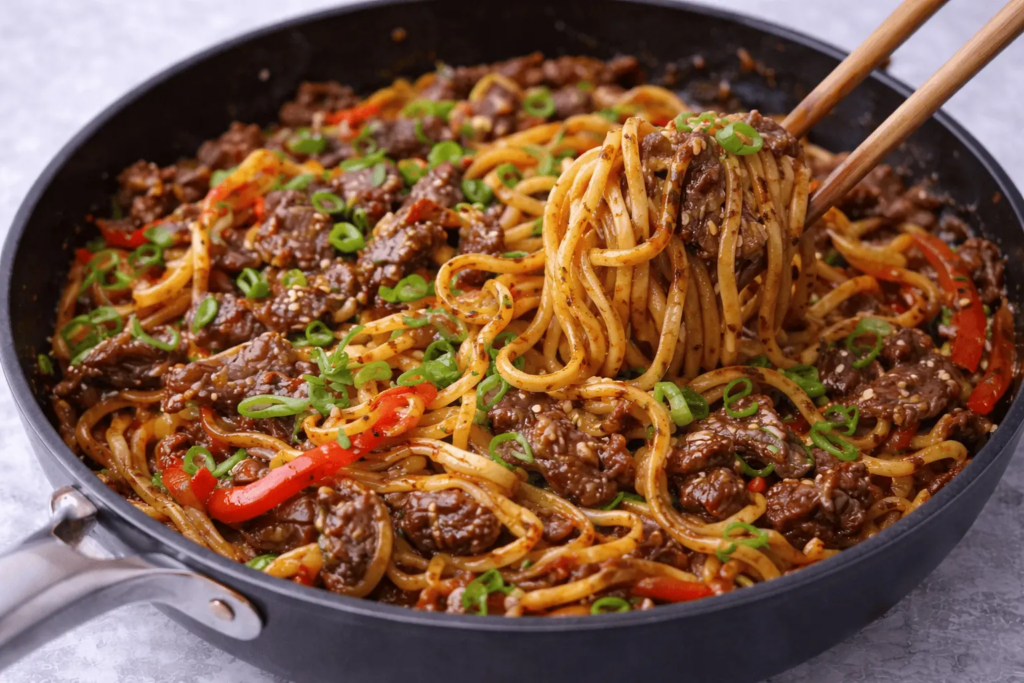
Craving a weeknight dinner that hits all the notes—spicy, savory, a little sweet, and totally slurpable? Spicy Gochujang Beef Noodles deliver restaurant-worthy flavor in under 30 minutes. This Spicy Gochujang Beef Noodles recipe combines tender beef, chewy noodles, crisp vegetables, and a glossy Korean-inspired sauce for a bold, satisfying bowl you’ll want on repeat. If you’re in the mood for an easy beef noodle dinner that still tastes special, Spicy Gochujang Beef Noodles are the perfect choice.
Table of Contents
Table of Contents
Why You’ll Love These Spicy Gochujang Beef Noodles
- Fast and flavorful: This Spicy Gochujang Beef Noodles dish is ready in about 30 minutes, perfect for busy weeknights.
- Balanced heat: Gochujang adds deep, complex spice without overpowering the noodles.
- Amazing texture: Tender beef, bouncy noodles, and crisp bell peppers in every bite.
- Weeknight-friendly: Simple pantry staples with big, bold results.
- Customizable: Make your Spicy Gochujang Beef Noodles milder, spicier, or veggie-
What You Need for Spicy Gochujang Beef Noodles
Here’s what makes Spicy Gochujang Beef Noodles truly shine, plus a few tools to keep cooking quick and smooth.
- Quality beef: Sirloin or flank steak sliced thinly against the grain for maximum tenderness.
- Noodles: Fresh udon or wheat noodles for that signature chewy bite in Spicy Gochujang Beef Noodles.
- Signature sauce: Gochujang, soy sauce, sesame oil, and brown sugar or honey for heat, umami, and gloss.
- Aromatics: Garlic and fresh ginger for fragrant depth.
- Veggies: Red bell pepper and green onions for color and crunch.
- Finishes: Sesame seeds for a nutty pop.
- Tools: Large skillet or wok, tongs, a small bowl for sauce, and a pot for boiling noodles.
Ingredients
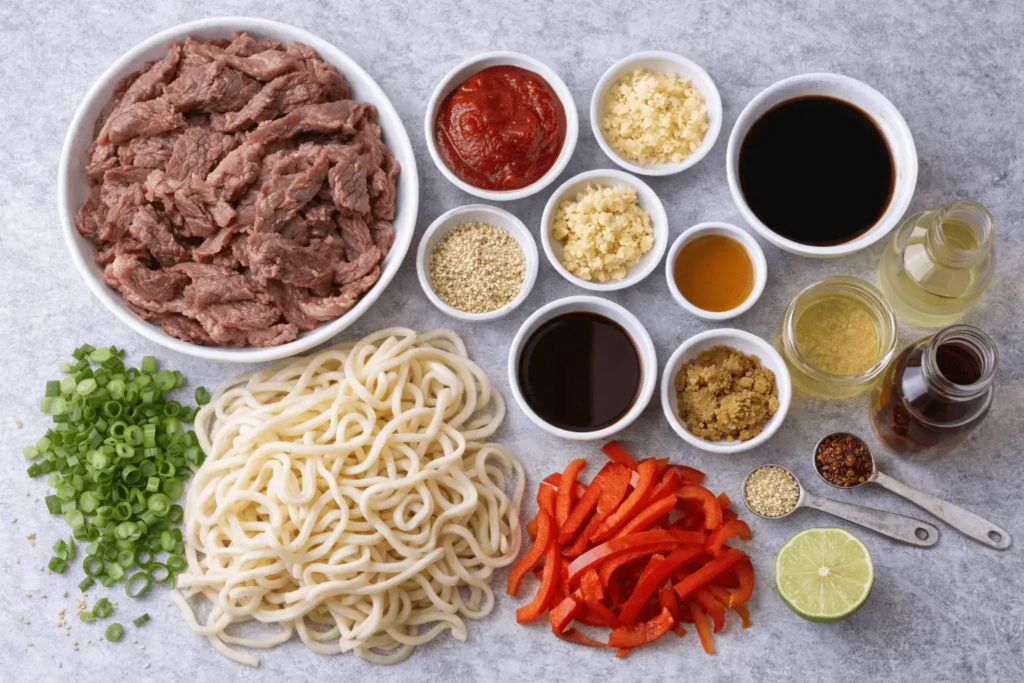
- 1 pound beef strips (sirloin or flank steak), sliced thinly against the grain
- 12 to 14 ounces fresh noodles (udon or wheat noodles)
- 2 tablespoons gochujang (Korean chili paste), leveled
- 3 tablespoons soy sauce (low-sodium preferred)
- 3 garlic cloves, minced
- 1 tablespoon fresh ginger, grated
- 1 tablespoon toasted sesame oil
- 1 to 2 tablespoons brown sugar or honey (to taste)
- 1 red bell pepper, thinly sliced
- 4 green onions, sliced (whites and greens separated)
- 1 tablespoon sesame seeds (plus more for serving)
- 2 tablespoons neutral cooking oil (canola, avocado, or vegetable)
- Optional: 1 to 2 tablespoons rice vinegar or fresh lime juice (for brightness)
- Optional: 1 to 2 teaspoons gochugaru (Korean chili flakes) for extra heat
How to Make the Best STEP-BY-STEP
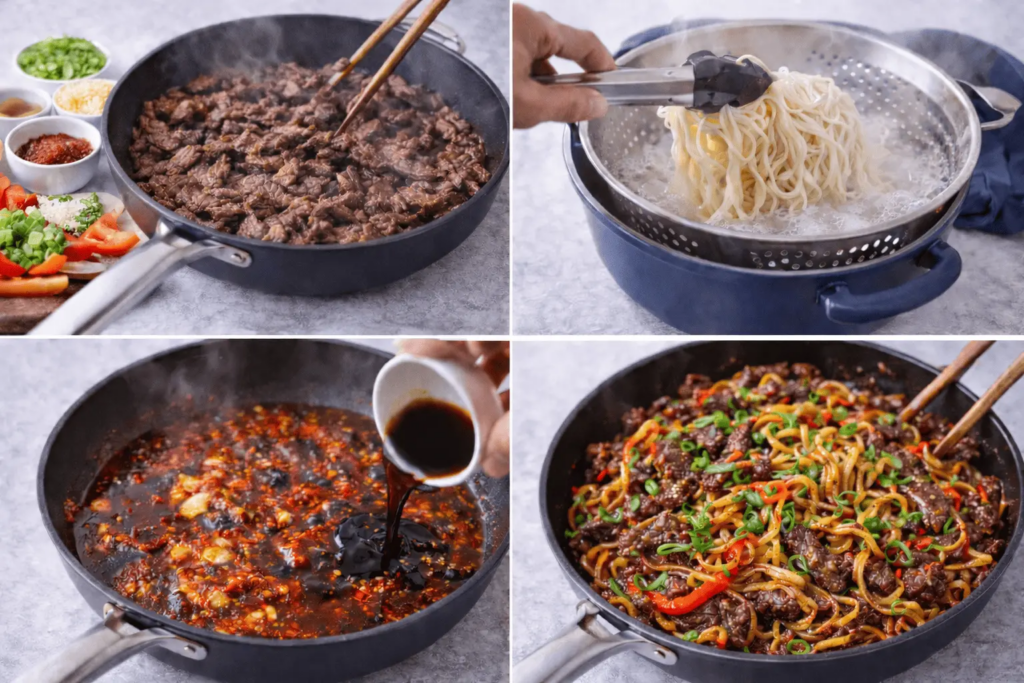
- Slice and prep. Thinly slice the beef against the grain. Mince the garlic, grate the ginger, slice the red bell pepper, and chop the green onions (keep whites and greens separate). Set everything near the stove.
- Make the sauce. In a small bowl, whisk together gochujang, soy sauce, sesame oil, and brown sugar or honey. If you like tang, add a splash of rice vinegar or lime juice. For extra heat, mix in gochugaru.
- Boil the noodles. Cook fresh udon or wheat noodles according to package directions until just shy of tender. Drain, rinse briefly under warm water to remove excess starch, and toss with a few drops of sesame oil to prevent sticking.
- Sear the beef. Heat 1 tablespoon neutral oil in a large skillet or wok over medium-high. Working in batches to avoid crowding, sear the beef for 60 to 90 seconds per side until nicely browned but still juicy. Transfer to a plate.
- Sauté aromatics and peppers. Add the remaining 1 tablespoon neutral oil to the pan. Toss in garlic, ginger, and the white parts of the green onions. Stir-fry 30 seconds until fragrant, then add the bell pepper. Cook 2 to 3 minutes until crisp-tender.
- Sauce it up. Reduce heat to medium and pour in the gochujang sauce. Let it bubble for 30 to 60 seconds to thicken slightly and mellow the spice.
- Toss noodles and beef. Add the noodles and any beef juices back to the pan. Use tongs to toss everything together until the noodles are evenly coated and glossy. Add the beef and toss just to warm through.
- Finish and serve. Sprinkle in sesame seeds and the green parts of the scallions. Taste and adjust with more soy (salt), sugar/honey (sweetness), or vinegar/lime (brightness) as needed. Serve hot with extra sesame seeds and scallions.
Healthier Alternatives
- Swap noodles: Try whole wheat ramen, brown rice noodles, or shirataki for fewer carbs.
- Lean protein: Use sirloin tip or top round; trim visible fat. You can also substitute ground turkey or extra-firm tofu.
- Less sugar: Start with 1 teaspoon honey and increase to taste, or use a zero-calorie sweetener you like.
- Load the veg: Add mushrooms, bok choy, snap peas, or broccoli to increase fiber and nutrients.
- Lighten sodium: Choose low-sodium soy sauce or use half soy plus half water or unsalted stock.
- Air-fry the beef: Lightly spray and air-fry at 400°F (205°C) for 5 to 7 minutes for a leaner sear.
Serving Suggestions
- Top with a jammy egg or fried egg for extra richness.
- Add cucumber ribbons and a squeeze of lime for cool crunch and contrast.
- Serve with kimchi or quick-pickled radishes for tangy heat.
- Garnish with cilantro, scallion curls, or toasted nori strips.
- Pair with a simple cucumber salad or steamed edamame for a complete meal.
Storing Tips & Make Ahead & Freeze Tips
- Fridge: Store leftovers in an airtight container for up to 3 days. The sauce keeps noodles moist and flavorful.
- Reheating: Warm gently in a skillet over medium with a splash of water or stock to re-loosen the sauce. Microwave in 45-second bursts, tossing between intervals.
- Make ahead: Mix the sauce up to 4 days in advance and store in the fridge. Slice the beef and veggies a day ahead to streamline dinner.
- Freezer: Freeze cooked beef and sauce (without noodles) for up to 2 months. Thaw overnight, reheat, and toss with freshly cooked noodles.
Common Mistakes to Avoid
- Overcrowding the pan: Cook beef in batches to get a proper sear, not a steam.
- Overcooking noodles: Slightly undercook; they’ll finish in the sauce for perfect texture.
- Skipping aromatics: Garlic and ginger are essential to bloom the sauce’s flavor.
- Not slicing against the grain: This keeps the beef tender and easy to eat.
- Too much heat on the sauce: Simmer, don’t scorch; gochujang can burn quickly.
- Undersalting or oversweetening: Taste and adjust—you want balanced heat, salt, and sweetness.
- Forgetting acidity: A splash of vinegar or lime brightens and rounds the dish.
Final Tips & Conclusion
For the most flavorful Spicy Gochujang Beef Noodles, keep it hot and fast. Prep everything first so you can move quickly once the pan is hot. Sear the beef for color, respect the chew of the noodles, and season at the end for perfect balance. In under half an hour, you’ll have a bowl that’s glossy, spicy, and deeply satisfying—exactly the kind of easy beef noodle dinner that earns a permanent spot in your rotation.
Ingredients
Instructions
- 1Slice and prep. Thinly slice the beef against the grain. Mince the garlic, grate the ginger, slice the red bell pepper, and chop the green onions (keep whites and greens separate). Set everything near the stove.
- 3Make the sauce. In a small bowl, whisk together gochujang, soy sauce, sesame oil, and brown sugar or honey. If you like tang, add a splash of rice vinegar or lime juice. For extra heat, mix in gochugaru.
- 5Boil the noodles. Cook fresh udon or wheat noodles according to package directions until just shy of tender. Drain, rinse briefly under warm water to remove excess starch, and toss with a few drops of sesame oil to prevent sticking.
- 7Sear the beef. Heat 1 tablespoon neutral oil in a large skillet or wok over medium-high. Working in batches to avoid crowding, sear the beef for 60 to 90 seconds per side until nicely browned but still juicy. Transfer to a plate.
- 9Sauté aromatics and peppers. Add the remaining 1 tablespoon neutral oil to the pan. Toss in garlic, ginger, and the white parts of the green onions. Stir-fry 30 seconds until fragrant, then add the bell pepper. Cook 2 to 3 minutes until crisp-tender.
- 11Sauce it up. Reduce heat to medium and pour in the gochujang sauce. Let it bubble for 30 to 60 seconds to thicken slightly and mellow the spice.
- 13Toss noodles and beef. Add the noodles and any beef juices back to the pan. Use tongs to toss everything together until the noodles are evenly coated and glossy. Add the beef and toss just to warm through.
- 15Finish and serve. Sprinkle in sesame seeds and the green parts of the scallions. Taste and adjust with more soy (salt), sugar/honey (sweetness), or vinegar/lime (brightness) as needed. Serve hot with extra sesame seeds and scallions.
Nutrition Facts
How spicy are these noodles, and how can I adjust the heat?
They’re medium-spicy. Reduce gochujang to 1 tablespoon for milder heat, skip gochugaru, and add a touch more honey to soften the spice. For extra heat, add more gochujang or a pinch of chili oil.
What noodles work best if I can’t find fresh udon?
Use fresh wheat noodles, refrigerated yaki udon, dried udon, ramen, or even linguine in a pinch. Cook just to al dente, then finish in the sauce.
Can I make this gluten-free?
Yes. Use gluten-free tamari instead of soy sauce, pick a gluten-free gochujang brand, and swap in rice noodles. Always check labels to be sure.
Can I use a different protein?
Absolutely. Thinly sliced chicken thighs, pork tenderloin, shrimp, or extra-firm tofu (pressed and pan-fried) all work well. Adjust cook times as needed.
Do I have to marinate the beef?
No. The quick sear plus the sauce coats the beef beautifully. If you want extra flavor, toss the sliced beef with 1 tablespoon soy and 1 teaspoon cornstarch for 10 minutes before searing.
For more information about balanced nutrition and healthy eating, visit the CDC nutrition guidelines.
More Cozy Recipes from Quickoria
If you enjoyed these Spicy Gochujang Beef Noodles, you may also like other cozy dinner ideas from Quickoria. Discover more comforting meals, protein-packed bowls, and easy weeknight recipes by exploring our collection of flavorful dishes designed for busy days and satisfying dinners.
best-chicken-pot-pie-casserole-creamy-easy
Quick One-Pan Lemon Butter Salmon – A Fast, Flavorful, One-Pan Dinner